.svg)

.svg)
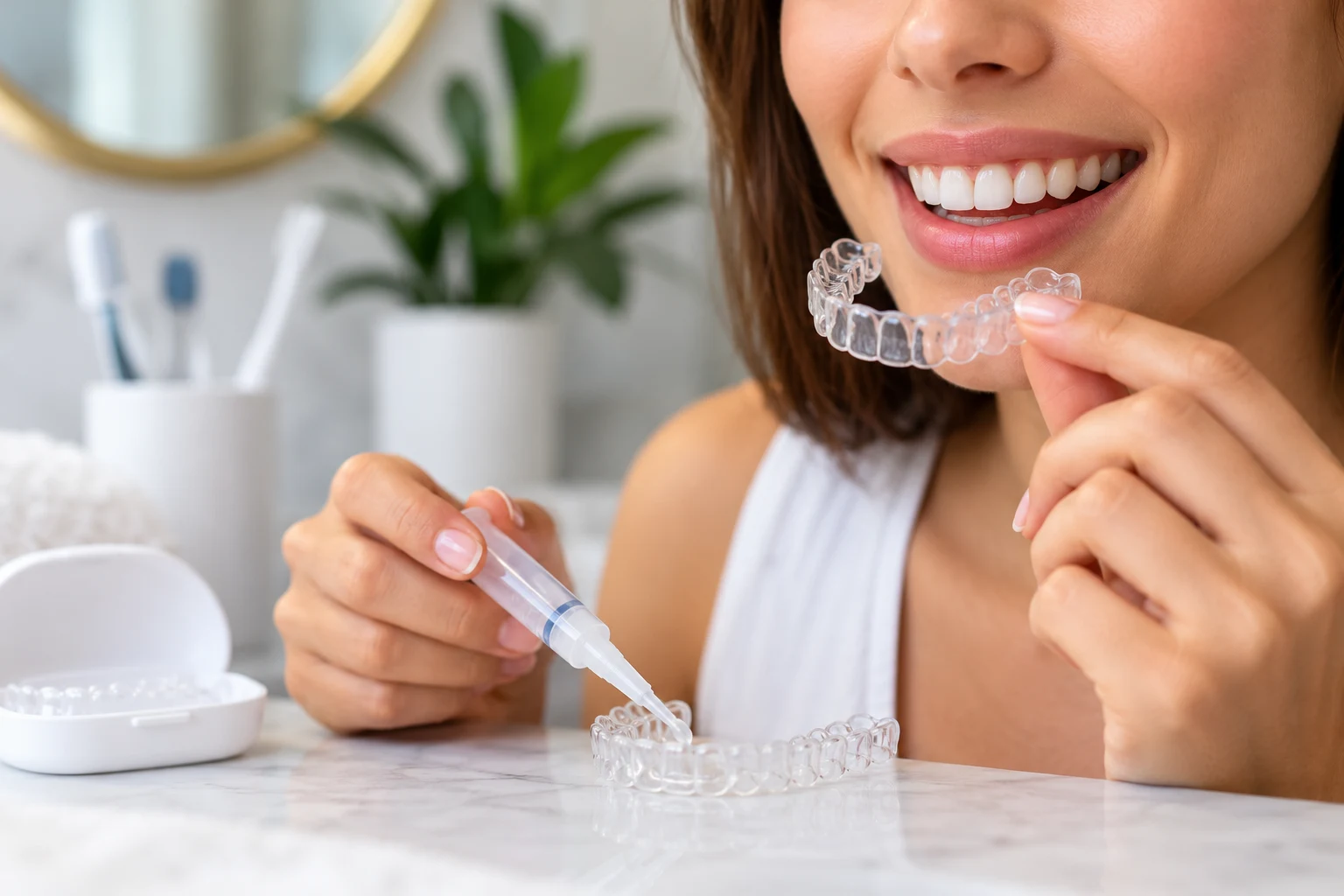
If you are straightening your teeth with Invisalign, you may also be thinking about whitening them. After all, aligning your smile and improving tooth color can seem like a natural combination. The good news is that teeth whitening and Invisalign treatment may be compatible, but the timing and method matter.
Whitening during orthodontic treatment is not always the best choice for every patient. Attachments, tooth sensitivity, gum irritation, and the type of whitening product you use can all influence the results.
For patients exploring Invisalign and teeth whitening in Fremont, CA, understanding how the two treatments work can help you plan a smile that looks healthier and more even.
Fremont Star Dental can help patients discuss their oral health goals, orthodontic options, and questions about whitening as part of a personalized dental care plan.
Can You Whiten Your Teeth While Using Invisalign?
Yes, some patients can whiten their teeth during Invisalign treatment. However, your dentist or orthodontic provider should help determine whether it is appropriate and which whitening method is suitable.
Invisalign clear aligners are designed primarily to move teeth into planned positions. Although some people use compatible whitening products with their aligners, standard aligners are not automatically intended to function as whitening trays.
The best approach depends on your current treatment stage, tooth and gum health, and whether attachments are present.
Why Timing Matters
Whitening products usually contain peroxide-based ingredients that help break down stains. These products can temporarily increase tooth sensitivity or irritate the gums if used incorrectly.
During Invisalign treatment, your teeth may already feel tender after changing to a new set of aligners. Adding whitening can make that discomfort more noticeable.
Your provider can help you decide whether to whiten now, wait until your teeth have settled, or complete whitening after orthodontic treatment.
How Invisalign Works
Invisalign treatment uses a series of custom-made clear aligners to gradually move teeth into planned positions. Patients typically wear each set according to their provider's instructions before progressing to the next set.
For treatment to work as intended, aligners need to be worn consistently. Most patients are instructed to wear them approximately 20 to 22 hours per day, although your provider will give you specific guidance.
What Are Invisalign Attachments?
Some Invisalign treatment plans use small tooth-colored attachments bonded to selected teeth. These attachments help the aligners apply the forces needed for particular tooth movements.
Attachments can affect whitening results because the material bonded to the tooth does not whiten in the same way as natural enamel. If whitening is performed while attachments are present, the exposed enamel may change color differently from the covered areas.
Once the attachments are removed, differences in shade may become more noticeable, depending on the treatment and staining pattern.
Should You Whiten Your Teeth Before, During, or After Invisalign?
There is no single timeline that works for everyone. Your dentist can help you choose the approach that best fits your orthodontic progress and smile goals.
Whitening Before Invisalign
Whitening before orthodontic treatment may be an option if your teeth and gums are healthy and your provider approves it.
However, teeth whitening is often easier to plan after the teeth have reached their final positions. Orthodontic treatment can change how much of each tooth is visible and may reveal areas that were previously difficult to see.
If you choose to whiten before treatment, your dentist may recommend allowing time for any temporary sensitivity to settle before beginning orthodontic treatment.
Whitening During Invisalign
Whitening during Invisalign treatment may be possible for selected patients, particularly when sensitivity is minimal and the provider approves the product.
However, there are several factors to consider:
- Attachments may lead to uneven color changes.
- Tooth sensitivity may increase.
- Whitening gel may irritate the gums if it contacts soft tissue.
- Standard aligners may not distribute whitening products as intended.
- Additional products may affect comfort or interfere with aligner use if used incorrectly.
Do not add whitening gel to your aligners without professional guidance. Using a product in a tray that was not designed for whitening can lead to irritation or inconsistent results.
Whitening After Invisalign
For many patients, whitening after Invisalign is a practical choice.
Once the teeth are aligned and attachments have been removed, your dentist can evaluate the final tooth surfaces and recommend an appropriate whitening method. This may help produce a more consistent result.
Your provider may suggest allowing the teeth and gums to settle after orthodontic adjustments or attachment removal before beginning whitening.
Remember that teeth can shift after Invisalign treatment if retainers are not worn as directed. Retention remains important even after you have achieved your desired smile.
What Are Your Teeth Whitening Options?
Several whitening methods are available, and each has different benefits and limitations.
Professional In-Office Teeth Whitening
In-office whitening uses professional products under dental supervision. Your dentist evaluates your oral health, protects the soft tissues as appropriate, and applies the whitening treatment according to the product's instructions.
This option may suit patients who want a supervised treatment and a relatively quick change in tooth shade. The degree of whitening varies with the type of stain, tooth structure, and individual response.
Dentist-Supervised Take-Home Whitening
Your dentist may provide custom whitening trays and a whitening product for use at home. These trays are designed to fit your teeth and help keep the product in the intended area.
This option allows you to whiten over a period recommended by your provider. It is important to follow the prescribed application time and avoid using more gel than directed.
If you are wearing Invisalign, ask whether whitening should be performed with separate trays rather than your orthodontic aligners.
Over-the-Counter Whitening Products
Whitening strips and other over-the-counter products can help reduce certain surface and deeper stains, depending on their formulation.
However, these products may not be suitable for everyone. Patients with gum inflammation, untreated cavities, significant sensitivity, or restorations in visible areas should seek dental advice before using them.
Avoid unregulated whitening products or methods that may damage enamel and irritate the gums.
What Causes Uneven Whitening During Invisalign?
Uneven whitening can occur for several reasons.
Attachments and Covered Tooth Surfaces
Attachments cover small portions of enamel. Because whitening products act on the exposed natural tooth structure, the color beneath an attachment may differ from the surrounding area during treatment.
Existing Dental Restorations
Crowns, veneers, fillings, and other restorations do not whiten like natural teeth. If you have restorations on visible teeth, whitening may create a color difference between the restoration and your natural enamel.
Your dentist can explain whether the difference is likely to be noticeable and whether any further treatment is appropriate.
Different Types of Tooth Stains
Yellowing caused by certain age-related or dietary stains may respond differently from intrinsic discoloration caused by medication, trauma, or developmental conditions.
Whitening results also vary from person to person. A dental examination helps identify the likely cause of discoloration and set realistic expectations.
How to Protect Your Teeth During Whitening and Invisalign
If your provider approves whitening, follow a few basic precautions.
- Brush twice daily with fluoride toothpaste.
- Clean between your teeth every day.
- Remove aligners for meals and drinks other than plain water, according to your treatment instructions.
- Clean aligners as directed by your provider.
- Use whitening products only as instructed.
- Do not exceed the recommended application time or frequency.
- Report persistent sensitivity or gum irritation.
- Wear aligners for the prescribed number of hours each day.
If whitening causes discomfort, stop using the product and contact your dentist for guidance. Do not continue simply because the product is intended for home use.
Does Teeth Whitening Affect Invisalign Results?
Whitening does not generally move teeth or replace the orthodontic forces created by aligners. However, improper use of whitening products can cause discomfort, irritate the gums, or complicate your treatment routine.
Avoid allowing whitening to interfere with aligner wear. Consistent wear is essential for keeping your Invisalign treatment on track.
Your orthodontic provider should also know about any whitening products you are using so they can advise you on timing and compatibility.
Plan Your Smile Goals With Fremont Star Dental
Straightening your teeth and improving their color can both contribute to a smile you feel comfortable sharing. The key is choosing the right sequence and avoiding products that could irritate your teeth or gums.
Contact Fremont Star Dental to discuss Invisalign treatment, teeth whitening options, and a personalized approach to your smile goals in Fremont, CA.
FAQs on Teeth Whitening with Invisalign
Q1: Can I whiten my teeth while wearing Invisalign?
A: Some patients can whiten during Invisalign treatment, but it depends on their oral health, attachments, sensitivity, and the whitening product. Ask your dentist or orthodontic provider before combining treatments.
Q2: Can I put whitening gel directly into my Invisalign aligners?
A: Do not assume that Invisalign aligners are suitable whitening trays. Some whitening products are designed for specific trays, and using them incorrectly can irritate the gums or cause uneven results. Follow your provider's instructions.
Q3: Is it better to whiten teeth before or after Invisalign?
A: Whitening after Invisalign is often easier to plan because the teeth are in their final positions and attachments have been removed. However, the best timing depends on your treatment and dental health.
Q4: Will Invisalign attachments cause uneven whitening?
A: They can. Attachments cover small areas of enamel, and the covered surfaces may respond differently from exposed teeth. Your dentist can advise whether whitening should wait until attachments are removed.
Q5: Can Invisalign make teeth sensitive during whitening?
A: Tooth tenderness may occur during aligner treatment, particularly when switching to a new set. Whitening products can also cause temporary sensitivity, so combining the two may increase discomfort for some patients.
Q6: Will teeth whitening damage my Invisalign aligners?
A: Compatibility depends on the product and its instructions. Do not use whitening agents with your aligners unless your dental provider confirms that the method is appropriate.
Q7: Do crowns and fillings whiten with natural teeth?
A: No. Crowns, fillings, and other restorations do not respond to whitening products in the same way as natural enamel. A dentist can help you plan for a consistent-looking result.
Q8: How long should I wait to whiten after Invisalign?
A: There is no universal waiting period. Your dentist can advise when your teeth and gums have settled sufficiently after attachment removal and orthodontic treatment.