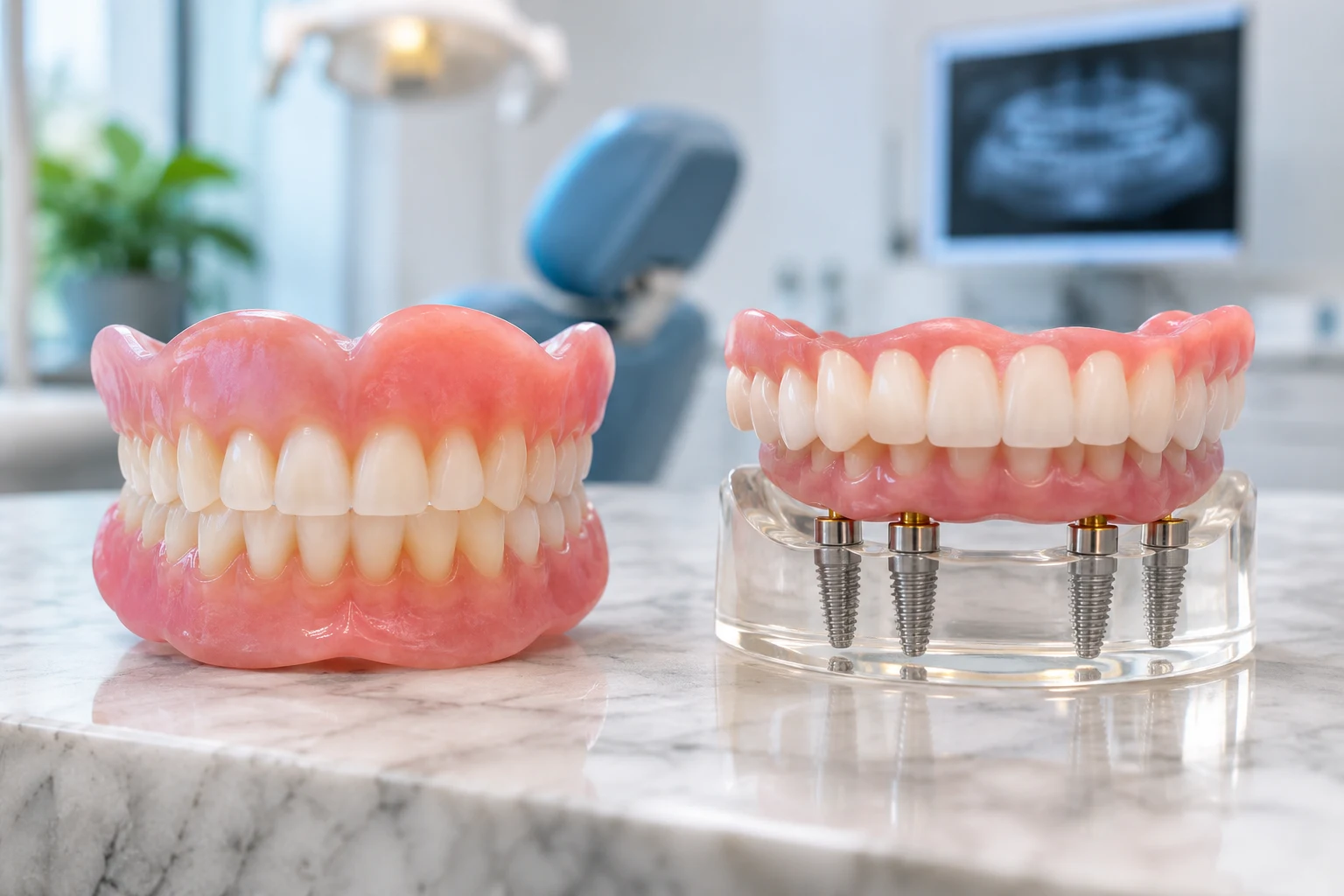
Missing several teeth or an entire arch can affect everyday activities in ways you might not expect. Eating certain foods may become difficult, dentures may feel loose when you speak, or you may find yourself thinking about your teeth more often than you would like.
If you are considering tooth replacement, two options worth understanding are traditional dentures and implant-supported dentures. Both can restore the appearance of missing teeth, but they differ in stability, maintenance, cost, and the procedures involved.
For patients exploring dentures and dental implants in Fremont, the right choice depends on oral health, jawbone condition, budget, and personal preferences.
Fremont Star Dental can help patients discuss tooth replacement options and understand the factors that matter when choosing between removable dentures and implant-supported restorations.
What Are Traditional Dentures?
Traditional dentures are removable appliances designed to replace missing teeth. Complete dentures replace all the teeth in the upper or lower arch, while partial dentures replace several missing teeth when some natural teeth remain. Patients can explore complete and partial removable appliances to understand the available options.
Complete upper dentures generally rely on a combination of fit, support, and suction against the underlying tissues. Lower dentures rest on the gum ridge and can be more challenging for some patients to stabilize because of the shape of the jaw and movement of the tongue.
Partial dentures may use clasps or other components to obtain support from the remaining teeth.
Benefits of Traditional Dentures
Traditional dentures offer several advantages:
- They can replace many missing teeth without implant surgery.
- They are removable for cleaning.
- They may have a lower initial cost than implant-supported treatment.
- They can be suitable for patients who cannot undergo implant placement.
- They can often be adjusted, relined, or replaced as the mouth changes.
For many people, conventional dentures remain a practical and effective tooth replacement option.
Limitations of Traditional Dentures
Traditional dentures can move during eating or speaking, especially when the lower jaw has significant bone loss or the denture does not fit well.
Some patients experience sore spots, difficulty chewing certain foods, or changes in speech while adjusting to their appliance. Dentures may also need periodic adjustments as the gums and jawbone change over time.
These limitations do not affect everyone equally. A well-fitting denture can provide comfortable function, but ongoing dental care remains important.
What Are Implant-Supported Dentures?
Implant-supported dentures use dental implants placed in the jawbone to provide additional support for a denture. Understanding how dental implants are placed can help patients become familiar with the treatment process.
The implants act as anchors. Depending on the design, the denture may attach to the implants through special connectors or be secured in a way that allows it to remain in place during daily activities.
Some implant-supported dentures are removable by the patient for cleaning. Others are fixed and can generally be removed only by a dental professional.
These designs have different maintenance requirements, so it is important to understand which type is being recommended.
Benefits of Implant-Supported Dentures
Implant-supported dentures may offer several advantages:
- Greater stability during eating and speaking.
- Reduced movement compared with many conventional dentures.
- Improved confidence for patients concerned about slipping.
- Support that does not rely solely on the gums.
- Potential benefits for chewing function and comfort.
These are some of the benefits of dental implants that may make implant-supported restorations an appealing option for eligible patients.
Implants can also help preserve the bone in areas where they are placed by transmitting functional forces to the jawbone. However, they do not prevent all bone changes throughout the jaw.
Limitations of Implant-Supported Dentures
Implant-supported treatment involves additional planning and may require surgery. Some patients need bone grafting procedures or other preparatory procedures before implants can be placed.
The initial cost is generally higher than that of traditional dentures. Healing may take several months, and patients need to maintain the implants and surrounding gum tissue carefully.
Implant-supported dentures can also require repairs, replacement components, adjustments, or eventual denture replacement. They are not maintenance-free.
Neither option is automatically better for every patient. The best choice depends on the clinical situation and what you value most in a tooth replacement.
Which Option Is More Comfortable?
Comfort depends on the fit of the appliance, the shape of the jaw, the health of the gum tissue, and how well you adapt to wearing dentures.
Comfort With Traditional Dentures
Traditional dentures can be comfortable when they fit well. However, changes in the jawbone and gum tissue can affect their fit over time.
A loose denture may rub against the gums or shift when you chew. Relining or adjusting the appliance can sometimes improve comfort.
If your denture repeatedly causes sore spots or slips during meals, have it evaluated rather than trying to reshape it yourself.
Comfort With Implant-Supported Dentures
Implant-supported dentures are often more stable because the implants provide anchorage. This can make eating and speaking easier for patients who struggle with movement in conventional dentures.
However, implants do not guarantee that every patient will experience the same level of comfort. The denture design, implant position, gum health, and bite all influence the result.
Your dentist can help determine whether implant support is likely to address your particular concerns.
Which Option Makes Eating Easier?
Both types of dentures can restore chewing ability, but their performance varies.
Traditional dentures may allow you to eat many everyday foods once you have adapted to them. Some patients still find hard, chewy, or sticky foods challenging, particularly if the lower denture moves.
Implant-supported dentures may provide better stability and chewing function for selected patients. The improvement depends on the number and position of implants, the design of the restoration, and the patient's oral health.
You may still need to make dietary adjustments, particularly during the initial healing period or while adapting to a new appliance. Understanding dental implant recovery can help you prepare for the healing period and follow the appropriate post-treatment instructions.
How Much Do Implant-Supported and Traditional Dentures Cost?
The cost of dentures in Fremont, CA, varies according to the type of appliance, materials, laboratory work, and additional procedures required.
Traditional Denture Costs
Traditional dentures generally have a lower initial cost because they do not require implant surgery.
However, you should account for future adjustments, relining, repairs, and replacement. Changes in the jawbone can gradually affect how the denture fits.
Implant-Supported Denture Costs
Implant-supported dentures generally involve a larger initial investment.
The total cost may include diagnostic imaging, implant placement, the denture itself, attachment components, and preparatory procedures such as bone grafting. Fixed full-arch restorations may have different requirements from removable implant-retained dentures.
Ask for an itemized treatment estimate so you can compare the complete costs of both options. You can also review the factors that influence dental implant treatment costs. Dental insurance coverage varies, and implant procedures may be subject to exclusions or annual maximums.
If cost is a concern, ask about available payment arrangements or financing and review the terms before proceeding.
Who Is a Good Candidate for Implant-Supported Dentures?
Implant-supported dentures may be appropriate for patients missing several or all teeth who want greater stability than a conventional denture provides. Several factors that affect implant candidacy should be evaluated before treatment begins.
Bone and Gum Health
Sufficient jawbone is important for supporting dental implants. If bone volume is limited, additional procedures may be necessary, although not every patient will be a suitable candidate.
Your dentist will also evaluate the gum tissue and any existing oral infections before recommending treatment.
General Health and Healing
Medical conditions, medications, smoking, and other factors can influence healing and implant success.
A review of your medical history helps your dental provider assess potential risks and determine whether additional precautions are needed.
Daily Maintenance
Patients receiving implant-supported dentures must be willing to maintain their oral hygiene and attend regular dental visits.
Fixed restorations may require special cleaning tools to remove food debris and plaque around the prosthesis. Removable implant-supported dentures need to be taken out and cleaned according to the instructions provided.
Can You Switch From Traditional Dentures to Implant-Supported Dentures?
Yes, some patients who already wear conventional dentures can transition to implant-supported treatment.
The first step is an examination to evaluate the fit of the existing denture, the condition of the gums, and the amount of available jawbone.
Your dentist may recommend imaging to assess whether implants can be placed safely. In some cases, the existing denture may be modified for temporary use or adapted to work with a new treatment plan. In others, a new denture will be required.
If you have worn dentures for many years, you may have experienced changes in your jawbone. These changes do not automatically rule out implants, but they can affect the available treatment options.
How Do You Care for Each Type of Denture?
Good oral hygiene is important regardless of which option you choose.
Caring for Traditional Dentures
Remove and clean removable dentures as instructed. Brush them with a denture brush and a suitable denture cleanser rather than ordinary abrasive toothpaste.
Clean your gums, tongue, and any remaining natural teeth daily. Follow your dentist's instructions about soaking the appliance and removing it overnight.
Caring for Implant-Supported Dentures
Clean around implants and under the denture according to the design of the restoration. Your dentist may recommend interdental brushes, floss designed for implants, or other cleaning aids.
Attend regular maintenance appointments so the dental team can assess the implants, gum tissue, bite, and prosthetic components. Maintaining gum health and periodontal care is also important for supporting the tissues around dental implants.
Report bleeding, persistent soreness, looseness, or damage promptly. Early assessment can help prevent small problems from becoming more complicated.
Find the Right Tooth Replacement Option at Fremont Star Dental
Choosing between traditional and implant-supported dentures is a personal decision that should balance comfort, function, cost, and long-term care.
Fremont Star Dental can help you explore suitable tooth replacement options and understand the treatment process. Schedule a consultation to discuss your oral health, daily needs, and goals for restoring your smile.
FAQs on Implant-Supported Dentures vs. Traditional Dentures
Q1: Are implant-supported dentures better than traditional dentures?
A: Implant-supported dentures generally offer greater stability, while traditional dentures usually have a lower initial cost and do not require implant surgery. The better option depends on your oral health, budget, and preferences.
Q2: Do implant-supported dentures feel more like natural teeth?
A: They may feel more stable than conventional dentures because implants provide anchorage. However, the experience varies, and neither option feels exactly like natural teeth.
Q3: Can I get implant-supported dentures if I have bone loss?
A: Possibly. Your dentist will assess your available jawbone and may recommend additional procedures, such as bone grafting, if appropriate. Significant bone loss does not automatically rule out treatment.
Q4: Are implant-supported dentures removable?
A: Some implant-supported dentures are removable by the patient, while others are fixed and can generally be removed only by a dental professional. Your provider can explain which design suits your needs.
Q5: Do implant-supported dentures prevent jawbone loss?
A: Dental implants can help preserve bone in the areas where they are placed by transmitting functional forces to the jawbone. However, they do not prevent all bone loss throughout the jaw.
Q6: How long do implant-supported dentures last?
A: Longevity depends on oral hygiene, implant health, the restoration materials, and regular maintenance. The denture or its components may need repair or replacement even when the implants remain stable.
Q7: Can I eat normally with implant-supported dentures?
A: Many patients find eating easier because the denture is more stable. Your dentist will advise you on foods to avoid during healing and how to gradually return to your usual diet.
Q8: How do I know which type of denture is right for me?
A: A dental examination can help assess your gums, jawbone, remaining teeth, and treatment goals. Your dentist can compare suitable options, estimated costs, maintenance requirements, and expected outcomes.