.svg)

.svg)
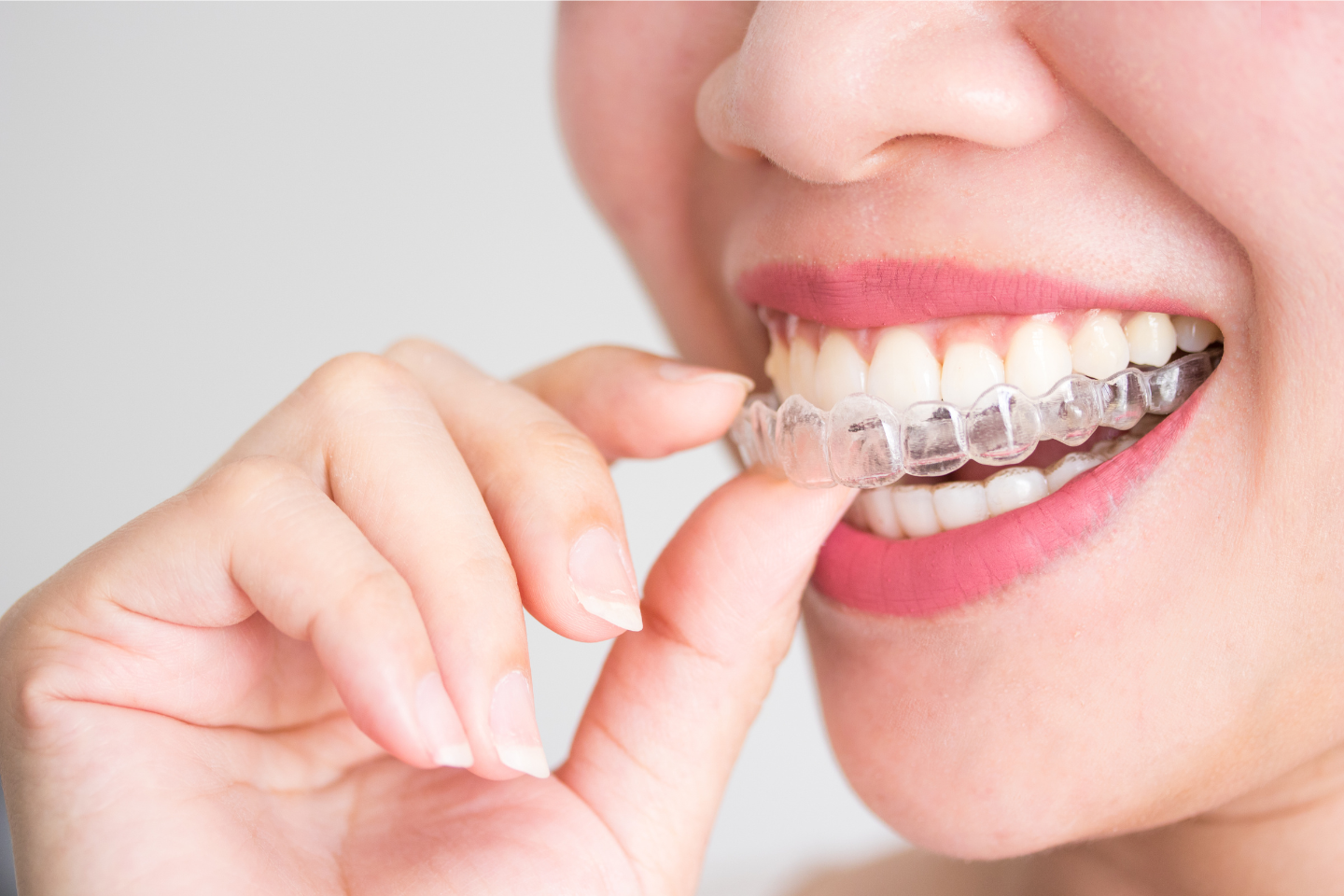
For decades, the standard response to a complex bite misalignment was a mouth full of metal brackets, wires, and perhaps even headgear. If you are living with a lower jaw that protrudes past your upper teeth, you have likely wondered: can Invisalign fix an underbite, or are traditional braces your only path to a confident smile?
As an orthodontic clinical consultant who has spent the last 12 years analyzing patient diagnostic scans alongside top-tier orthodontists, I have watched clear aligner technology evolve from a basic cosmetic tool into a powerhouse of biomechanical engineering. I remember a time when treating a severe malocclusion with clear plastic trays seemed impossible. Today, things are wildly different.
The short answer is a resounding yes—but with a few crucial caveats. Let's pull back the curtain on Invisalign underbite treatment to see if this discreet, comfortable option is the right fit for your unique anatomy.
Quick Answers on Invisalign for Underbites
If you are looking for a fast, straightforward answer to bring to your next dental checkup, here it is:
- Mild to Moderate Cases: Yes, can you fix an underbite with Invisalign? Absolutely. Clear aligners routinely correct dental underbites caused by poorly positioned teeth.
- Severe or Skeletal Cases: If your underbite stems from a structural discrepancy in your jawbone rather than just your teeth, Invisalign alone may not suffice. It often requires integration with surgical orthodontics.
- The Power of Elastics: Successful clear aligner therapy for underbites usually relies on auxiliary tools, such as small elastics (rubber bands) attached to your trays to gently shift the alignment of your jaw.
- Compliance is Mandatory: Unlike permanent metal braces, clear aligners only work if you wear them for 20 to 22 hours every single day.
Patients considering clear aligner treatment for bite correction should also understand the importance of consistency and regular orthodontic monitoring throughout the process.
What is an Underbite?
Before evaluating treatment options, it helps to understand exactly what your doctor sees during a clinical evaluation. An underbite is a type of malocclusion where the lower front teeth overlap and sit forward of the upper front teeth when the jaw is closed.
In a healthy, ideal bite alignment, your upper teeth act like the lid of a shoebox, resting slightly outside and over the lower teeth. An underbite reverses this relationship, creating a reverse scissor effect.
Orthodontists categorize underbites into two primary types:
- Dental Underbites: Your jawbones are perfectly proportioned, but your teeth grew in at incorrect angles, pushing the lower teeth forward or the upper teeth backward.
- Skeletal Underbites: Your lower jawbone (mandible) is physically overdeveloped, or your upper jawbone (maxilla) is underdeveloped, creating a structural mismatch in your skeleton.
For a more detailed overview of how aligners work for different bite conditions, the American Association of Orthodontists provides this helpful resource on clear aligner orthodontic treatment.
How Invisalign Tackles a Complex Underbite
To understand the Invisalign effectiveness for underbite correction, we have to look at how modern aligners exert force. Invisalign does not just push teeth into a straight line; it uses meticulously planned, sequential movements mapped out by specialized 3D software.
The Role of SmartForce Attachments
If you move forward with an Invisalign underbite plan, your orthodontist will likely place small, tooth-colored bumps of composite resin on specific teeth. These are called SmartForce attachments. They act like tiny handles, giving the smooth plastic aligners the leverage they need to rotate, angulate, and pull teeth into their proper positions.
Some patients who already have dental restorations often ask whether aligners will still work effectively. In many situations, Invisalign compatibility with dental crowns depends on the condition and placement of the restoration.
The Magic of Orthodontic Elastics
Trays alone cannot pull a lower jaw backward. To fix an underbite, your provider will use orthodontic rubber bands stretched from the upper back molars to the lower front teeth. This setup creates a continuous, gentle anchor pull that coaxes the lower teeth backward while encouraging the upper teeth to slide forward.
Think of your aligners as a steering wheel and the elastics as the engine providing the necessary directional horsepower to reshape your bite.
The Pros and Cons of choosing Invisalign over Braces
Every orthodontic choice involves balancing convenience against mechanical capability. Here is an honest, expert breakdown of how clear aligners stack up against traditional Invisalign braces fix an underbite pathways.
The Advantages
- Discreet Appearance: The clear plastic is virtually invisible during casual conversation, which is a massive psychological boost for adult professionals and self-conscious teens.
- Uncompromised Oral Hygiene: You can pop the trays out to brush and floss normally. This drastically reduces the risk of white spot lesions (decalcification) and gingivitis, which frequently plague traditional braces patients. Following proper aligner cleaning and maintenance routines is equally important for keeping your trays clear and hygienic.
- Dietary Freedom: There are no restrictions on crunchy or sticky foods because you remove the appliances whenever you eat.
The Disadvantages
- The Discipline Tax: The absolute freedom of removability is also Invisalign's greatest vulnerability. If you leave your trays on the nightstand or forget to put them back in after lunch, your teeth will stall or relapse.
- Speech Adjustments: You may experience a mild lisp during the first few days of a new tray sequence as your tongue adapts to the plastic covering the back of your front teeth.
What the Data Says: Invisalign Effectiveness for Underbites
We don't just have to rely on marketing claims; clinical research backs up the real-world success of clear aligners. According to a landmark study published by the American Journal of Orthodontics and Dentofacial Orthopedics (AJO-DO), clear aligners demonstrate high predictability when performing minor to moderate dental movements, including the tipping and bodily movement of incisors required to correct a mild reverse bite.
However, industry experts from the American Association of Orthodontists (AAO) emphasize that skeletal anomalies present a completely different hurdle. When an underbite is purely genetic and structural, clear plastic cannot physically alter the length of a jawbone. In these advanced clinical scenarios, a combined approach of orthognathic jaw surgery and pre-surgical Invisalign alignment is necessary to achieve a stable, functional outcome.
Treatment timelines can vary significantly depending on the severity of the bite issue, but understanding the average Invisalign treatment duration can help patients set realistic expectations before starting care.
Worth saying plainly: underbite cases almost always cost more than a standard Invisalign quote. Attachments, elastics, and extra tray sets add up, and a longer timeline means more refinement trays along the way. Ask for a quote based on your actual scans, not the number a friend mentioned for straightening a few crooked teeth — the two cases aren't really comparable.
Are You a Candidate for Invisalign Underbite Treatment?
Determining your candidacy requires an in-person diagnostic workup, complete with digital impressions and a panoramic cephalometric X-ray. However, you can gauge where you might fall based on common clinical benchmarks.
Ideal Candidates
You are likely an excellent fit for clear aligner therapy if your underbite is primarily dental, your wisdom teeth have been evaluated, and you possess the personal discipline to wear the trays consistently. Adults whose jawbones have completely stopped growing often find Invisalign to be an elegant solution for correcting minor alignment drift that occurred after childhood orthodontics.
Patients with overlapping concerns such as crowding or uneven alignment may also benefit from learning how clear aligners improve crooked teeth alignment while simultaneously improving bite function.
Complex Cases Requiring Alternative Approaches
If your underbite causes severe facial asymmetry, extreme difficulty chewing solid food, or severe obstructive sleep apnea due to jaw positioning, you are likely dealing with a severe skeletal issue. For these cases, traditional fixed braces or surgical intervention remain the gold standard for safety and long-term stability.
One thing worth flagging for parents: if a child's underbite is skeletal and caught early, say, ages 7 to 10, while the jaw is still growing, orthodontists sometimes reach for reverse-pull headgear before Invisalign is even on the table. It's not glamorous, and kids don't love wearing it, but nudging the upper jaw forward while it's still developing can soften a skeletal underbite enough that aligners become a realistic option later, instead of surgery being the only route.
In some cases, correcting bite alignment may also reduce strain on the jaw joints, which is why some patients explore whether Invisalign can ease jaw discomfort and tension as part of their orthodontic treatment journey.
FAQs on Underbite Fixing
1. Can Invisalign really fix an underbite?
Yes, Invisalign can successfully treat many mild to moderate underbite cases, especially when the issue is primarily dental rather than skeletal. Clear aligners gradually shift teeth into better alignment and may use attachments or elastics for more complex corrections. Severe skeletal underbites may require additional orthodontic or surgical treatment.
2. How long does Invisalign take to correct an underbite?
Treatment time varies depending on the severity of the underbite and patient compliance. Mild cases may improve within 12 to 18 months, while more complex cases can take longer. Wearing aligners consistently for 20–22 hours daily is essential for timely progress.
3. Is Invisalign better than braces for underbite correction?
Invisalign offers several advantages, including a discreet appearance, easier oral hygiene, and removable convenience. For mild to moderate underbites, Invisalign can be just as effective as braces. However, traditional braces or surgery may be more appropriate for severe skeletal cases.
4. What causes an underbite?
An underbite can be caused by genetics, jawbone growth patterns, childhood habits, or tooth positioning issues. Some underbites are dental, involving tooth misalignment, while others are skeletal, involving jaw structure differences. Proper diagnosis is important for choosing the right treatment.
5. Do Invisalign attachments and elastics help with underbite treatment?
Yes, attachments and elastics are commonly used to improve Invisalign’s ability to correct underbites. Attachments help aligners grip teeth more effectively, while elastics apply targeted force to reposition the bite. These tools enhance treatment precision for more complex cases.
6. Does correcting an underbite improve oral health?
Yes, correcting an underbite can reduce abnormal tooth wear, improve chewing function, decrease jaw discomfort, and enhance speech. Proper bite alignment also supports better long-term dental health. Treatment often provides both cosmetic and functional benefits.
7. Are Invisalign aligners painful for underbite treatment?
Most patients experience mild pressure or temporary soreness when switching to new aligners, but significant pain is uncommon. The discomfort is usually manageable and fades after a few days. Many patients find Invisalign more comfortable than traditional braces.
8. Will I need a retainer after Invisalign underbite treatment?
Yes, retainers are essential after Invisalign treatment to maintain your corrected bite and prevent relapse. Teeth naturally tend to shift over time, so long-term retainer use helps preserve results. Your dentist will provide a personalized retention plan.