.svg)

.svg)
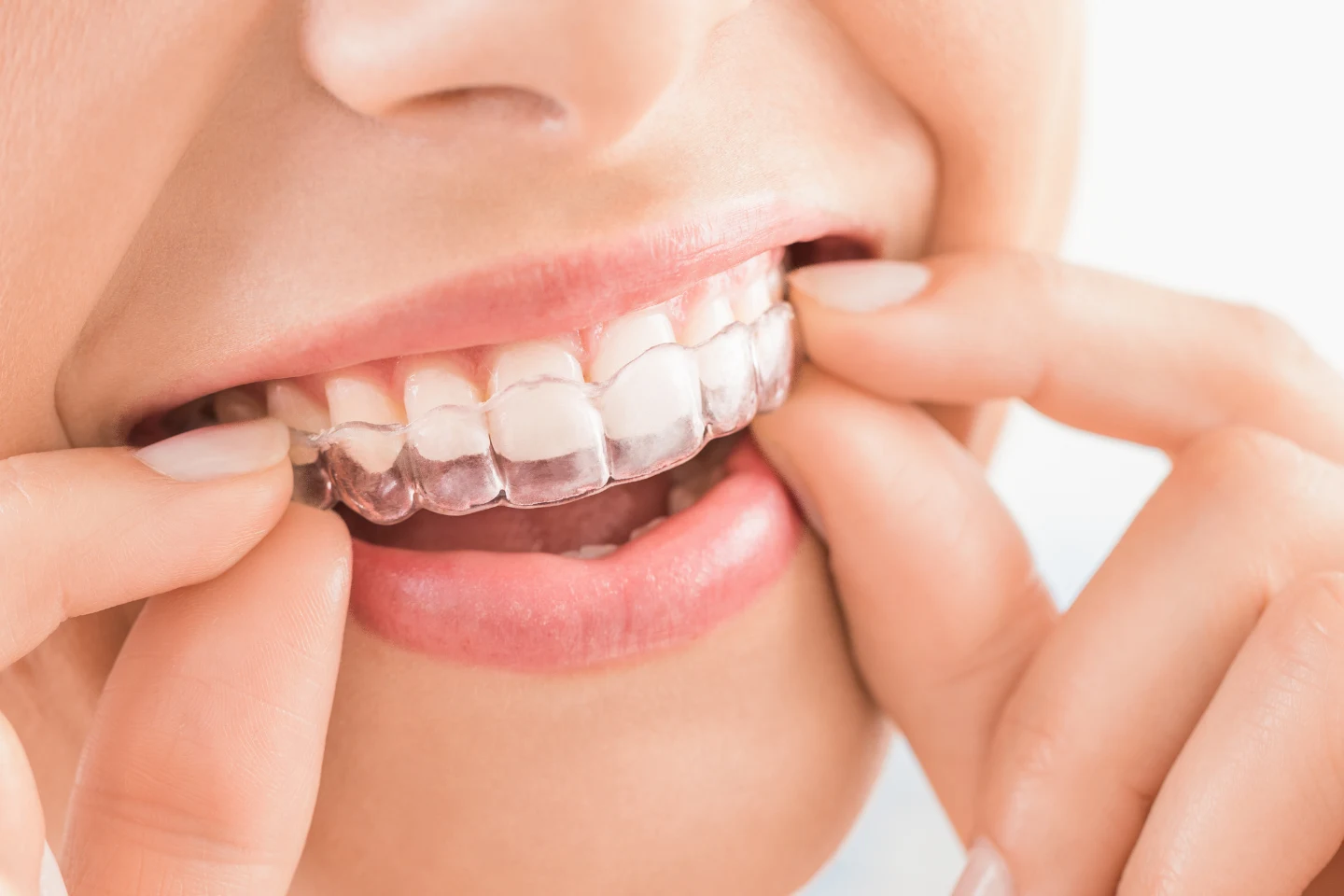
If you have one or more dental crowns and are considering straightening your teeth with Invisalign, you’re not alone. Many adults who’ve had restorative dental work, such as crowns, bridges, or fillings, are now exploring clear aligners to improve their smiles.
The big question is: Can you get Invisalign with a crown in Fremont? The answer is yes — in most cases, you can. However, the treatment plan must be carefully planned to ensure that your crowns and aligners work well together.
At Fremont Star Dental, our Invisalign-certified dentists specialize in designing personalized treatment plans for patients with existing dental restorations. Here’s how Invisalign works and how it interacts with crowns.
Understanding Invisalign: A Modern Way to Straighten Teeth
Invisalign is an orthodontic system that uses a series of custom-made, clear aligners to gradually move teeth into alignment. Unlike traditional metal braces, Invisalign trays are removable, comfortable, and nearly invisible, making them a popular choice among adults and teens.
Each set of aligners is worn for about two weeks before switching to the next one in the series. Over time, the aligners apply gentle pressure to reposition teeth into a straighter, healthier alignment.
To discover more about this advanced orthodontic system, explore our Invisalign treatment for complete details.
Key benefits of Invisalign include:
- Virtually invisible aligners for discreet treatment
- No dietary restrictions (you can remove aligners to eat)
- Easier oral hygiene compared to braces
- Comfortable fit with smooth, BPA-free material
- Customization through advanced digital scanning technology
What Are Dental Crowns?
A dental crown is a cap placed over a tooth to restore its shape, strength, and appearance after damage or decay. Crowns are commonly used when a tooth is cracked, broken, or weakened following a root canal or large filling.
Crowns can be made from various materials, such as:
- Porcelain or ceramic (for a natural look)
- Metal or porcelain-fused-to-metal
- Zirconia (highly durable and aesthetic)
They’re designed to function and look like natural teeth, which means they can often be included in orthodontic treatments like Invisalign but with some important considerations. If you’re interested in restoring damaged teeth, see our dental crowns and bridges to see available restorative options.
Can You Get Invisalign If You Have a Crown?
Yes, you can get Invisalign even if you have one or more dental crowns. The key lies in careful treatment planning and the type of tooth that has the crown.
Invisalign aligners work by gripping the surface of your teeth and applying gentle, controlled pressure to move them. As long as your crown is healthy, properly bonded, and well-positioned, it can handle these small forces safely.
Not sure if your crown will work with Invisalign? A quick consultation can give you a clear answer.
However, there are a few factors your dentist will evaluate before recommending Invisalign:
- Location of the Crown: If the crown is on a front tooth, special care must be taken because Invisalign attachments may not adhere as easily to porcelain as they do to natural enamel. If the crown is on a molar or premolar, it usually poses no problem for aligner fit.
- Condition of the Crown: The crown must be in good shape, securely bonded, without cracks or loose edges. If it’s old or compromised, your dentist may suggest replacing it before starting Invisalign. Learn more about this in our blog on how long dental crowns last.
- Attachment Placement: Invisalign uses small, tooth-colored bumps (called attachments) to help the aligners grip and move teeth. In some cases, these attachments can be adjusted or placed on natural teeth instead of crowns for better adhesion.
- Tooth Movement Requirements: If your dentist plans significant movement on a crowned tooth, adjustments may be needed to ensure the pressure doesn’t damage the crown or underlying tooth.
At Fremont Star Dental, our Invisalign specialists perform a detailed digital scan using the iTero Scanner, allowing precise mapping of your teeth, crowns, and bite alignment. This ensures that your treatment plan accommodates existing restorations safely and effectively.
How Invisalign Works Around Crowns
When Invisalign trays are custom-fabricated, the digital impressions from the iTero 3D scan include every tooth contour, including crowns. This helps create perfectly fitted aligners that won’t dislodge or stress the restoration.
If an attachment is needed on a crowned tooth, your dentist can use a method to help the attachment stick securely without damaging the crown’s surface.
In most cases:
- Crowns on back teeth move slightly or remain stable during Invisalign treatment.
- Crowns on front teeth can move predictably with customized aligner design and modified attachment techniques.
Your dentist will continuously monitor your progress to ensure your crowns remain intact and your treatment proceeds safely. To understand the process better, check our detailed blog on how long Invisalign takes.
Can Invisalign Damage Crowns?
When performed by an experienced Invisalign provider, the treatment is safe for crowns and other restorations. The forces applied by aligners are gentle and controlled, unlike the strong mechanical forces used in traditional braces.
However, potential risks include:
- Minor loosening of older crowns that were already compromised
- Attachment bonding challenges on porcelain surfaces
- Wear on poorly fitted or fragile crowns
To minimize these risks, Fremont Star Dental performs a full dental assessment before starting treatment. If needed, we reinforce or replace any unstable crowns before aligners are fabricated. Patients interested in aesthetic upgrades can explore our porcelain crowns and bridges for stronger, natural-looking restorations.
What If You Need a Crown During Invisalign Treatment?
Sometimes, a tooth might require a crown while you’re already undergoing Invisalign. This is manageable but requires coordination between your dentist and Invisalign provider.
The steps typically include:
- Temporarily pausing aligner wear for the crown procedure
- Taking a scan after the crown is placed to ensure new aligners fit perfectly
- Adjusting future aligner sets to match your updated tooth shape
Because Fremont Star Dental offers both restorative and orthodontic care in-house, these adjustments are simple and seamless.
Invisalign Alternatives for Complex Crown Cases
In rare situations where multiple crowns or bridges are involved, Invisalign may not be the most effective choice. For example:
- Large, fixed bridges connecting several teeth cannot move individually.
- Severely damaged crowns may not withstand orthodontic pressure.
In such cases, alternative options like limited orthodontics, ceramic braces, or composite reshaping may be considered. Your dentist will help you decide which approach best suits your dental condition and smile goals.
Benefits of Getting Invisalign with Crowns
Choosing Invisalign while having crowns offers several advantages:
- Preserves existing dental work: Gentle pressure protects crowns and fillings.
- Discreet appearance: Aligners remain virtually invisible.
- Comfort and convenience: Smooth trays minimize irritation.
- Comprehensive treatment: Straightens teeth while maintaining restorative stability.
- Customized precision: iTero digital scans ensure a perfect fit around crowns.
At Fremont Star Dental, patients with crowns often achieve results similar to those with natural teeth, depending on their case.
Caring for Crowns During Invisalign Treatment
To keep your teeth and restorations healthy throughout treatment:
- Brush and floss after every meal before reinserting aligners
- Clean aligners daily using a gentle, non-abrasive cleanser (see how to clean Invisalign retainers in Fremont, CA for detailed tips)
- Avoid biting or chewing with aligners in place
- Keep up with regular dental cleanings and check-ups
- Notify your dentist immediately if a crown feels loose or uncomfortable
Good hygiene and communication with your dental team are key to successful Invisalign results.
Why Choose Fremont Star Dental for Invisalign in Fremont
At Fremont Star Dental, we combine restorative expertise with advanced Invisalign technology to create healthy, well-aligned smiles, even for patients with existing crowns.
Our Invisalign treatment approach includes:
- Comprehensive 3D digital scans using iTero technology
- Customized treatment planning for patients with crowns or restorations
- Same-day emergency support if a crown becomes loose
- Flexible financing and personalized care plans
Whether you’re straightening your teeth for the first time or refining your smile after past dental work, we ensure every detail is managed with precision and care.
If you’ve been wondering whether Invisalign is possible with crowns, the answer is yes, and the results can be exceptional with the right care and planning. At Fremont Star Dental, our experienced Invisalign team will evaluate your smile, assess your restorations, and design a plan that delivers the best outcome possible.
Schedule your Invisalign consultation in Fremont today and get a personalized plan for your smile.
FAQs on Getting Invisalign with a Crown
Can Invisalign dislodge a crown?
Invisalign is designed to apply gentle, controlled pressure, so it typically does not dislodge a healthy crown. However, older or weakened crowns may loosen, which is why a dental check-up is important before starting treatment.
What teeth don’t qualify for Invisalign?
Teeth with severe misalignment, large dental restorations like bridges, or significant structural damage may not be ideal for Invisalign. Your dentist will evaluate whether alternative treatments are more suitable.
Can Invisalign move a tooth with a crown?
Yes, Invisalign can move a crowned tooth as long as the crown is stable and the surrounding tooth structure is healthy.
Do attachments stick to crowns?
Attachments may not bond as easily to crowns as they do to natural enamel, but dentists can adjust placement or use special techniques to improve adhesion.
Can a crown come loose during Invisalign treatment?
It’s uncommon, but if a crown is already compromised, Invisalign may reveal the issue. Regular monitoring helps prevent complications.