.svg)

.svg)
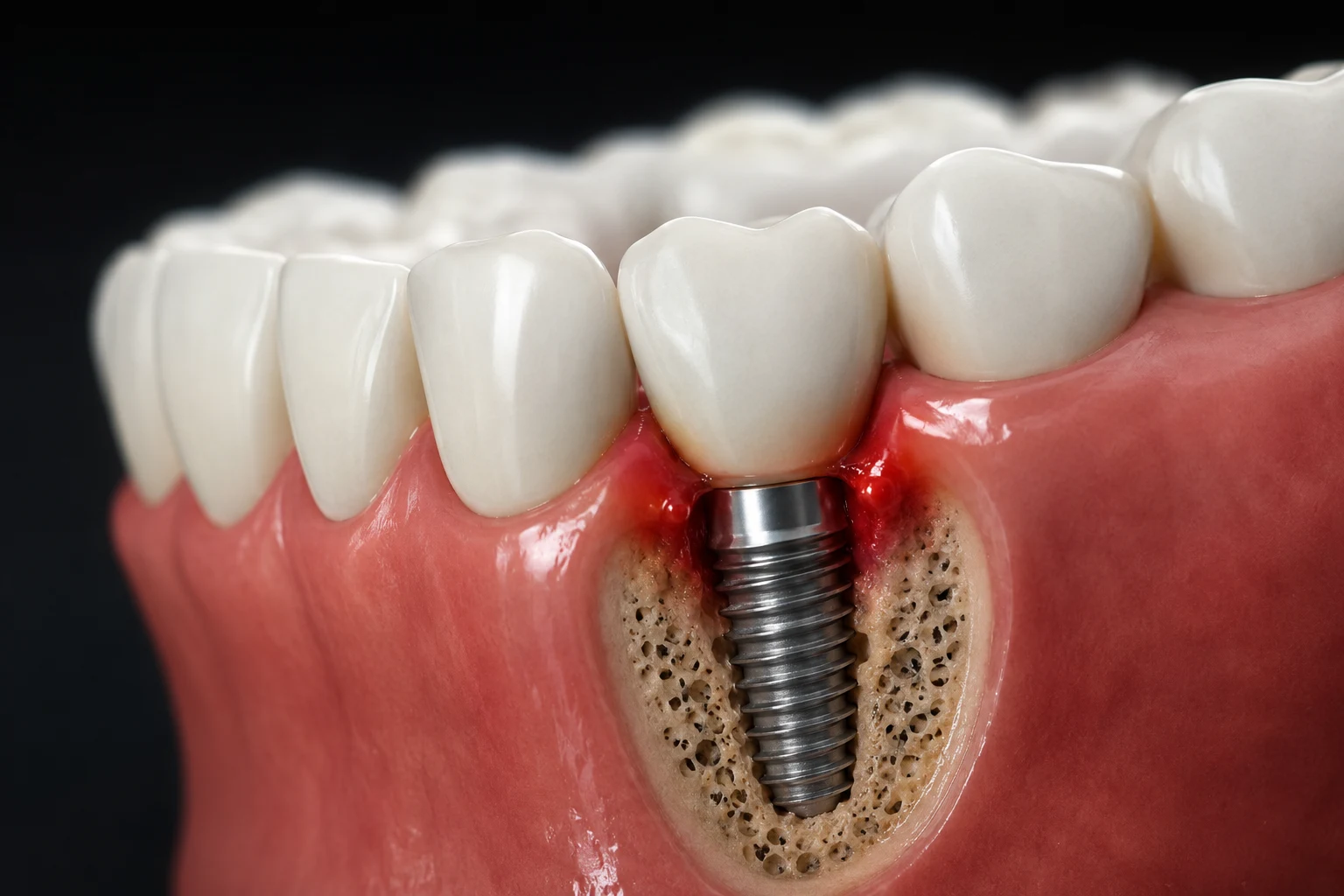
You got the implant in. The soreness faded, and you settled back into normal life, eating without thinking twice, brushing without dodging a spot, and not planning your whole day around a dental appointment. That's the point of getting an implant in the first place. Stop thinking about your teeth every time you sit down for a meal.
So it hits hard when something feels off weeks, months, or even years later. Maybe there's swelling near the gum line. A weird taste that won't quit. A little tenderness when you bite down on that side. The question that comes up almost immediately is simple: can dental implants get infected? Short answer, yes. The longer, more useful answer is what actually causes it, what it costs you in time and money depending on when you catch it, and what everyday habits keep it from happening at all.
What an Infected Implant Actually Feels Like Day to Day
Before we get into the clinical stuff, it helps to know what this looks like in real life. Most people notice it through small changes in routine, not an X-ray.
You might catch yourself chewing more on one side without really deciding to. Maybe your gums bleed a little when you floss around the implant, more than they used to. Some people notice a bad taste or mild odor that brushing doesn't fully clear up. Others feel a dull ache that comes and goes, the kind that's easy to write off as "probably nothing" for weeks.
None of this means panic. But it is worth paying attention to, because implant infections tend to be quiet at first and a lot more disruptive later. Catch it early, and you're usually looking at a simple cleaning and a tweak to your home care routine. Catch it late, and you might be dealing with bone loss around the implant, a longer treatment timeline, and in some cases, redoing the implant altogether. That hits both your schedule and your wallet.
Peri-Implantitis: The Clinical Side, in Plain Terms
The type of infection that affects dental implants is called peri-implantitis. Think of it as the implant version of gum disease, an inflammatory reaction in the tissue and bone around the implant, usually kicked off by bacteria building up along the gumline where the implant meets the gum.
There's also an earlier, milder stage called peri-implant mucositis. It only affects the soft tissue, hasn't touched the bone yet, and is reversible with proper cleaning and better home care. Peri-implantitis is a different story. It involves bone loss around the implant, and while it can often be managed and stabilized with treatment, it takes more involved care to get under control.
If gum inflammation is already a concern, professional evaluation can help identify problems before they affect the structures supporting an implant. Regular gum disease screening and periodontal care can be an important part of maintaining healthy tissues around dental restorations.
Here's the thing worth understanding: the implant post itself (titanium or zirconia) doesn't get infected the way a natural tooth does. There's no living tissue in it to decay. What actually happens is the gum and bone around it react to plaque and bacteria, the same way they'd react around a natural tooth. So yes, in a practical sense, implants can get infected. It's just the tissue around them doing the suffering.
What Causes It
Most cases trace back to a few familiar habits and conditions:
Inconsistent brushing or flossing around the implant site. Smoking, which slows healing and cuts blood flow to gum tissue. Uncontrolled diabetes, which makes it harder for the body to fight off bacteria. Leftover cement from the crown placement is irritating the gum. Grinding or excess bite force puts strain on the implant over time.
None of these are rare or unusual. They're ordinary parts of daily life that, left unmanaged, create the perfect conditions for inflammation to settle in.
What It Means for Your Time, Routine, and Budget
This is the part that matters more than the biology lesson. What does this actually cost you, in real terms?
Caught early, treatment usually means a deep cleaning around the implant, sometimes an antimicrobial rinse, and a quick follow-up visit. That's an hour or two of your time, spread across a couple of appointments, with a cost that's predictable and manageable.
For patients who need more thorough plaque and buildup removal, professional teeth cleaning and polishing can support better oral hygiene and help keep areas around restorations cleaner.
Let it progress to bone loss, and things get more involved. You might need a more thorough decontamination procedure, bone grafting to rebuild lost support, or in more serious cases, removing and replacing the implant entirely. That's a longer timeline, more appointments, and a bigger financial hit. It also means more time away from your normal eating habits while you heal.
Bottom line? A fifteen-minute cleaning today is a much smaller disruption to your week than a bone graft six months from now. This isn't about fear. It's just math.
Keeping It From Happening in the First Place
Good news: preventing implant infection isn't complicated, and it's not going to eat up your day. It fits into a normal routine without much extra effort.
Brush twice a day, paying attention to the gumline around the implant. Floss daily, or use an interdental brush made for implants. Show up for your regular cleanings and checkups, so buildup gets caught before it turns into a problem. And be upfront with your dental team about smoking, diabetes management, or grinding, so they can factor it into your care plan.
Truth is, patients who get dental implants near Fremont, and stay consistent with these habits rarely run into trouble. It's less about doing anything extreme and more about just not skipping the basics.
For additional guidance on maintaining an implant over time, single-tooth dental implant care can provide helpful information about keeping an implant-supported restoration clean and healthy.
Ready to Get Started?
If something feels a little off around your implant, or it's just been a while since your last checkup, get it looked at sooner rather than later. Fremont Star Dental works with patients throughout Fremont, on both new implant placements and ongoing care for implants already in place. A quick visit now can save you a much longer one later. Honestly, it's a lot easier to stay ahead of a small issue than to play catch-up with a bigger one. Reach out to Fremont Star Dental to schedule a checkup and keep your implant (and your routine) running the way it should.
FAQs on Dental Implant Infection
Can dental implants get infected years after placement?
Yes. Peri-implantitis can show up at any point after placement, not just in the first few months. Home care and regular checkups matter for the life of the implant, not just right after surgery.
How do I know if my implant is infected or if I'm just imagining it?
Persistent swelling, bleeding when brushing or flossing, an odd taste, tenderness when biting, or gum recession around the implant are all worth having checked. If you're on the fence, a quick exam is the easiest way to find out for sure.
Is an infected implant always removed?
No. Early-stage infections are usually treated with cleaning and better home care. Removal is generally only necessary in more advanced cases, where bone loss is significant and the implant's no longer stable.
Does smoking really affect implant infection risk that much?
Yes. Smoking cuts blood flow to gum tissue and slows healing, which makes it harder for your body to fight off bacteria around the implant. It's one of the biggest risk factors you can actually control.
How often should I get my implant checked after it's placed?
Most people do fine on the same schedule as regular dental checkups, roughly every six months, though your dental team may suggest more frequent visits depending on your history.
Can an infected dental implant be treated without surgery?
In some cases, yes. Early infections may improve with professional cleaning around the implant, antimicrobial treatment, and improved oral hygiene. More advanced peri-implantitis may require additional procedures to clean the implant surface or address bone loss.
Can an infected dental implant cause bone loss?
Yes. Peri-implantitis can damage the bone supporting the implant if inflammation continues untreated. The amount of bone loss depends on how advanced the infection is and how quickly treatment begins.
Can I brush and floss normally around a dental implant?
Yes. Keeping the area clean is one of the best ways to reduce the risk of infection. Brush twice daily and clean between your teeth and around the implant with floss, interdental brushes, or other tools recommended by your dentist.