.svg)

.svg)
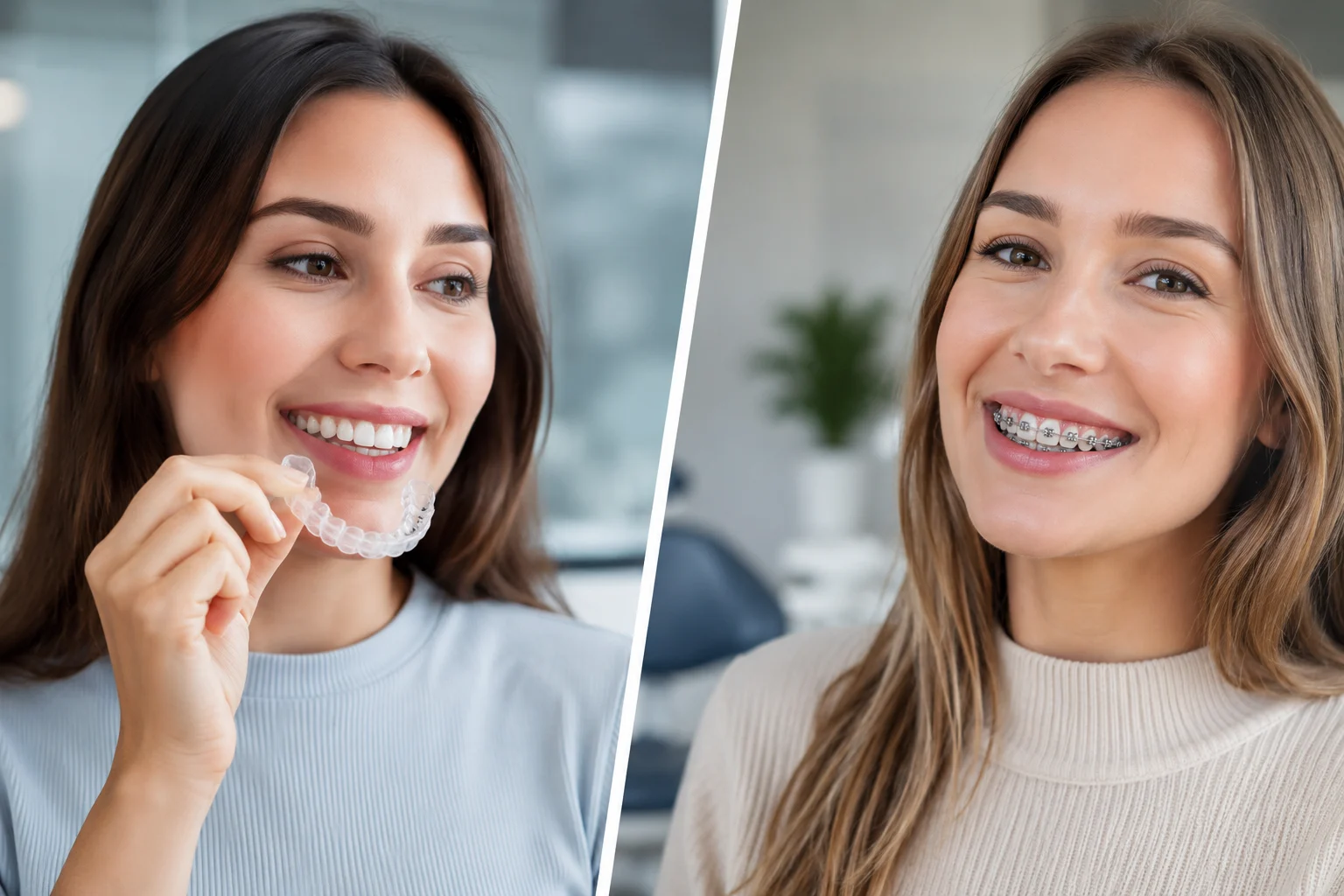
Deciding to straighten your teeth as an adult is a significant milestone. It is an investment in your long-term health, professional confidence, and personal self-esteem. However, once you make the commitment, the very next question usually introduces a major crossroad: should you opt for clear aligners or stick with time-tested traditional brackets?
A few decades ago, the choice was essentially made for you. Adults who needed orthodontic treatment simply wore metal brackets and wires, navigating the social and practical hurdles that came with them. Today, clear aligner technology has completely shifted the landscape. Many adult patients visit Fremont Star Dental wondering if modern clear alternatives can actually deliver the same reliable results as conventional systems. The answer is not a simple one-size-fits-all statement. Determining which path is genuinely better depends entirely on your unique dental architecture, daily habits, and personal priorities.
As an adult, your orthodontic journey involves considerations that teenagers rarely have to think about. You have professional meetings, corporate presentations, social events, and established dietary routines. You also have mature jawbones that have finished growing, which alters how teeth move compared to younger patients. Understanding the practical, structural, and financial realities of both treatments will empower you to make a choice that fits seamlessly into your life.
The Core Difference: How Invisalign and Traditional Braces Work
Traditional Metal and Ceramic Braces
Traditional orthodontic systems rely on a continuous, fixed mechanism to move your teeth. Brackets are bonded directly to the front of each tooth, and an archwire is threaded through them. This wire is held in place by tiny bands or built-in clips. During periodic adjustments, your dentist replaces or tightens the wire, applying strategic, continuous pressure that gradually guides the teeth into alignment.
Because these brackets are permanently fixed to your teeth for the duration of your treatment, they work around the clock without any intervention from you. For patients looking for a more discreet alternative to classic stainless steel, ceramic options offer brackets made of clear or tooth-colored materials. While they function identically to traditional metal brackets, ceramic structures blend in much more naturally with your tooth enamel, minimizing the visual impact of your treatment.
Invisalign Clear Aligners
Invisalign treatment in Fremont replaces the fixed network of wires and brackets with a series of custom-made, removable plastic trays.These trays are fabricated from a smooth, medical-grade polyurethane material that is virtually invisible when worn over the teeth. Each individual set of aligners is designed to make micro-adjustments to the positions of your teeth, moving them progressively closer to the final goal.
Instead of manual tightening appointments, you simply transition to the next set of trays in your custom sequence, typically every one to two weeks. To facilitate complex movements, small, tooth-colored composite bumps called attachments may be bonded to specific teeth. These attachments give the smooth plastic trays a surface to grip against, allowing the system to exert precise forces on individual teeth without sacrificing the overall aesthetic benefits of clear aligners.
Aesthetics and Daily Lifestyle: The Visibility Factor
Professional and Social Confidence
For the vast majority of adult patients, aesthetic discretion is the top priority. If your career involves regular public speaking, client-facing meetings, or video conferencing, you might feel self-conscious about the noticeable appearance of metal brackets. This is where clear aligners hold an undeniable advantage. They allow you to undergo comprehensive orthodontic correction without drawing immediate attention to your teeth, maintaining your professional image in the workplace. Many adults also choose Invisalign for working professionals because it fits seamlessly into busy careers and professional lifestyles.
Even ceramic options, while significantly less noticeable than metal, still utilize a visible wire across the dental arch. If absolute subtlety is your goal, clear aligners provide a level of cosmetic freedom that traditional systems simply cannot match. You can navigate social gatherings, weddings, and professional networking events with the peace of mind that your orthodontic treatment is practically invisible to the casual observer.
Dietary Freedom and Maintenance
Lifestyle flexibility is another area where the two treatments diverge dramatically. Traditional brackets come with a long list of dietary restrictions. Hard, crunchy, or sticky foods like whole apples, popcorn, caramel, and tough crusts can easily break brackets or bend wires, leading to unexpected emergency visits to the clinic. Eating can also require a bit of strategy, as food particles frequently become trapped in the framework of the brackets.
Clear aligners bypass these dietary limitations completely because you remove them before every meal or snack. You can continue to enjoy your favorite foods without worrying about damaging your orthodontic appliances. The only rule is that you must brush and rinse your teeth before putting the trays back in to prevent staining and trap bacteria against your enamel. This removable nature offers incredible convenience, but it also demands a structured daily routine to ensure success.
Treatment Efficiency and Complexity: What Can They Fix?
Handling Complex Orthodontic Issues
While clear aligner technology has advanced tremendously, traditional fixed systems remain the gold standard for severe, highly complex malocclusions. If you are dealing with severe tooth rotation, significant skeletal discrepancies, large gaps, or severe vertical misalignments like a deep overbite, fixed brackets offer a superior degree of physical control. Because they are anchored directly to the teeth, wires can exert steady, multidirectional forces that plastic trays find difficult to replicate.
For moderate crowding, minor gaps, and standard bite alignment issues, modern clear trays are exceptionally efficient. In many cases of moderate misalignment, aligners can achieve the desired results just as quickly as traditional systems, and sometimes even faster, thanks to the precise, software-driven planning that maps out every microscopic movement from day one.
Compliance and the Discipline Factor
The removable nature of clear trays is a double-edged sword. For the treatment to be effective, you must wear the trays for twenty-two hours every single day. They should only be taken out to eat, drink anything other than plain water, and perform your oral hygiene routine. If you frequently forget to put them back in, leave them out for long social events, or lose them, your teeth will quickly stop tracking along the planned path, delaying your final results.
Fixed brackets eliminate this compliance risk entirely. Once they are bonded in place by a qualified professional, they work continuously without requiring daily discipline or memory. For adults with hectic schedules, frequent travel, or a tendency to misplace small personal items, the built-in accountability of traditional fixed brackets can be a major stress reliever.
Comfort and Oral Hygiene During Treatment
Managing Discomfort and Soft Tissue Irritation
Any orthodontic treatment that actively moves teeth will cause some level of mild discomfort, particularly when a new wire is placed or a new set of aligner trays is introduced. This minor ache is a natural sign that the targeted pressure is working. However, the way this discomfort affects the soft tissues of your mouth differs between the two options.
Traditional systems feature metal edges and hooks that can initially scrape against the inner lining of your lips and cheeks, occasionally causing small sores until your mouth adjusts. Clear aligners are trimmed precisely to your gumline and feature a completely smooth surface, which drastically reduces the risk of soft tissue irritation. While your teeth will feel snug and slightly tender for the first few days of a new tray cycle, the overall experience tends to be much gentler on your cheeks and gums.
Brushing and Flossing Made Simple
Maintaining excellent oral health is crucial during any orthodontic treatment. Cleaning around fixed brackets and under archwires requires significant time and specialized tools, such as floss threaders, interdental brushes, and water flossers. If plaque is allowed to accumulate around the brackets, it can lead to permanent enamel staining, decalcification cavities, and inflamed gum tissue.
Clear aligners make your daily oral hygiene routine incredibly straightforward. You simply take the trays out and brush and floss normally. There are no specialized threads or tight metal spaces to navigate. You can clean your teeth thoroughly in a matter of minutes, keeping your gums healthy and your breath fresh throughout the entire duration of your smile transformation.
Cost and Insurance Considerations in Fremont
The financial investment for adult orthodontic care can vary based on the specific complexity of your case, the anticipated duration of your treatment, and the specific materials chosen. Historically, clear aligners carried a noticeable premium compared to traditional metal systems. Today, however, the cost gap has closed significantly, and the two options are often comparable in price.
Many dental insurance plans provide a lifetime orthodontic benefit that covers adult treatment, regardless of whether you choose clear trays or traditional brackets. When evaluating your options, it is highly beneficial to work with an experienced team that can maximize your insurance benefits, explore flexible in-house payment structures, and design a financial plan that aligns comfortably with your household budget.
Schedule Your Smile Consultation at Fremont Star Dental
Choosing between aligners and traditional systems is a personal decision that is best made with the guidance of an experienced clinical team. If you are ready to explore your options and find out which treatment path perfectly suits your lifestyle and health goals, contact a trusted dentist in Fremont, CA. Reach out to the welcoming professionals at Fremont Star Dental today to book your personalized, comprehensive smile evaluation.
Frequently Asked Questions on Invisalign vs Braces
How long does adult orthodontic treatment take on average?
For most adult patients, treatment times range anywhere from twelve to twenty-four months. Minor cosmetic adjustments with clear aligners can sometimes be completed in as little as six to nine months, while complex bite corrections using traditional systems may take longer. Your exact timeline depends on the complexity of your dental structure and your compliance with wearing the trays.
Is Invisalign more painful than traditional dental braces?
Both systems cause a temporary, mild soreness when your teeth first begin to shift under new pressure. However, clear aligners are generally considered more comfortable because they lack the sharp metal edges, wires, and hooks that can scrape or irritate the soft tissues inside your lips and cheeks.
Can I switch from traditional braces to clear aligners midway through my care?
Yes, in many cases it is entirely possible to transition from brackets to clear trays. Some patients begin their treatment with traditional fixed systems to correct severe structural issues or rotate stubborn roots, and then transition to clear aligners to complete the fine-tuning phases of their alignment.
Will straightening my teeth as an adult noticeably alter my face shape?
Orthodontic treatment primarily changes the alignment of your teeth and the relationship between your upper and lower jaws. While it will not change your underlying skeletal facial structure, correcting a severe overbite, underbite, or crossbite can improve your profile, create a more balanced jaw appearance, and beautifully enhance your natural smile aesthetics.
Can adults with dental crowns or fillings get Invisalign or braces?
Yes, many adults with crowns, fillings, bridges, or other dental restorations are still good candidates for orthodontic treatment. Your dentist will evaluate your oral health and existing dental work before recommending the most suitable option. A personalized treatment plan helps ensure safe and effective tooth movement.
Do I need to wear a retainer after Invisalign or braces?
Yes. After completing orthodontic treatment, wearing a retainer is essential to help maintain your new smile. Teeth naturally tend to shift over time, and a retainer helps keep them in their corrected positions. Your dentist will provide guidance on how often and how long to wear it.
Which option requires fewer dental visits: Invisalign or traditional braces?
Invisalign often requires fewer and shorter follow-up appointments because there are no wires to tighten or brackets to repair. Traditional braces typically require regular adjustment visits every few weeks. The exact schedule depends on your treatment plan and progress.
How do I know whether Invisalign or braces are right for me?
The best treatment depends on factors such as the complexity of your alignment issues, your lifestyle, oral health, and personal preferences. During your consultation, your dentist will examine your teeth, discuss your goals, and recommend the option that can provide the most effective and predictable results.