.svg)

.svg)
One of the first questions we hear from patients at Fremont Star Dental is: "Does dental insurance cover Invisalign?" It's a smart question to ask before you commit — Invisalign treatment in the Bay Area typically ranges from $3,000 to $8,000, and knowing your benefits upfront can make a real difference in what you pay out of pocket.
The short answer: yes, many dental insurance plans do cover Invisalign — but coverage varies widely depending on your plan type, employer, and specific benefits. Here's what Bay Area patients need to know before scheduling a consultation.
Quick Answer on Insurance Coverage for Invisalign
- Does dental insurance cover Invisalign? Many plans do, typically treating it the same as traditional braces under orthodontic benefits.
- How much do PPO plans cover? Most PPO plans with orthodontic coverage cover a percentage of Invisalign treatment—commonly 50%—up to a lifetime orthodontic maximum.
- Can you use FSA or HSA funds? Yes. The IRS classifies orthodontic treatment — including Invisalign — as a qualifying medical expense for both FSA and HSA accounts.
- Does age affect coverage? Some employer plans restrict orthodontic benefits to patients under 19. Always verify whether your plan covers adult orthodontics before assuming you're included.
- How can Bay Area patients reduce costs? Stack PPO benefits with FSA/HSA funds and in-office financing to significantly lower out-of-pocket costs.
How Invisalign Insurance Coverage Works
Invisalign is a brand of clear aligner therapy that uses a series of custom-fitted, removable plastic trays to gradually straighten teeth — prescribed and monitored by a licensed dentist or orthodontist. Patients considering Invisalign treatment should verify their orthodontic benefits before starting care.
Most dental insurance plans that include orthodontic benefits will cover Invisalign, per guidance from the American Association of Orthodontists (AAO). Because Invisalign is a clinically supervised orthodontic treatment, most major insurers classify it alongside traditional braces — not as a purely cosmetic procedure. That said, your actual coverage depends entirely on your specific plan.
Does Invisalign Count as Orthodontic Treatment?
Yes. Invisalign is recognized as orthodontic treatment by major insurers including Delta Dental, MetLife, Cigna, Guardian, and Aetna. When your plan includes orthodontic benefits, those benefits typically apply to Invisalign the same way they would to braces — though coverage details vary by carrier and plan.
Which Dental Insurance Plans May Cover Invisalign?
Not all dental insurance plans offer the same level of Invisalign coverage. The amount you may receive depends on the type of plan you have, whether orthodontic benefits are included, and your provider's specific policy terms. Understanding how different insurance plans typically handle Invisalign can help you estimate your out-of-pocket costs and make a more informed treatment decision.
PPO Plans
PPO (Preferred Provider Organization) dental insurance is the most common plan type among Bay Area working professionals, and it typically offers the most flexibility for Invisalign coverage. PPO plans allow you to see any licensed dentist or orthodontist, with higher reimbursements for in-network providers.
Most PPO plans with orthodontic benefits cover a percentage of Invisalign treatment — commonly 50% — up to a lifetime orthodontic maximum. Think of this maximum like a coupon with a one-time spending limit: once you've used it, it generally doesn't reset, even if years pass.
Employer Dental Plans
Many Bay Area tech companies and employers offer group dental coverage through carriers like Delta Dental, MetLife, Cigna, or Guardian. These employer-sponsored plans frequently include orthodontic riders, though the specific benefit amount varies by employer. Some larger Bay Area employers include orthodontic maximums of $2,000–$3,000 per employee as part of their benefits package.
One critical caveat: some employer plans limit orthodontic benefits to dependent children. If you're considering Invisalign for adults, always verify that your plan includes adult orthodontic coverage before assuming it applies.
Individual Dental Insurance
Individual dental plans — whether purchased through Covered California or directly from a carrier — tend to offer more limited orthodontic coverage than employer plans, and some exclude orthodontics entirely. Reviewing your dental insurance options can help you better understand which benefits may apply before beginning orthodontic treatment. If you're on an individual plan, review your Summary of Benefits carefully or call member services to confirm what's included.
Understanding PPO Coverage for Invisalign
A lifetime orthodontic maximum is the total dollar amount your plan will ever pay toward orthodontic care, regardless of how many treatments you receive. Here's how PPO Invisalign coverage typically plays out:
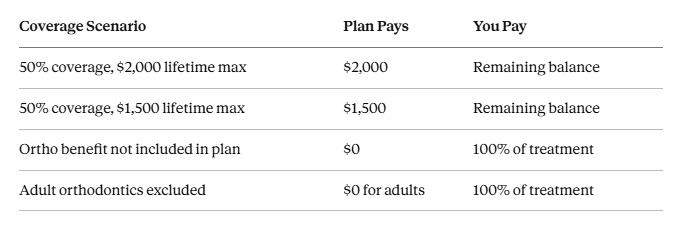
Here's how major Bay Area insurers generally approach Invisalign coverage:
- Delta Dental — Covers Invisalign as a standard benefit under all plans that include orthodontic coverage. Learn more about Delta Dental plans and available orthodontic benefits.
- MetLife — Covers clear aligners when a licensed dentist or orthodontist provides or monitors care; a pre-treatment estimate is recommended
- Cigna — The Dental 1500 plan includes up to $1,000 for orthodontic treatment
- Guardian — Many group plans include orthodontic benefits that apply to Invisalign
- Aetna — Coverage varies by plan; confirm your specific benefits before beginning treatment
Always call your carrier directly or let your dental office verify benefits on your behalf — plan details vary significantly even within the same insurer.
Can You Use FSA or HSA for Invisalign?
Yes — and this is one of the most underutilized strategies we see Bay Area patients overlook.
A Flexible Spending Account (FSA) is an employer-sponsored benefit that lets you set aside pre-tax dollars for eligible medical expenses. A Health Savings Account (HSA) works similarly, but is paired with a high-deductible health plan and rolls over year to year.
According to IRS Publication 502, orthodontic treatment — including Invisalign — qualifies as an eligible medical expense under both FSA and HSA accounts. Using pre-tax dollars effectively gives you a 20–35% discount on treatment, depending on your tax bracket.
Importantly, you can use FSA or HSA funds alongside your dental insurance benefit. There's no rule against stacking both. A patient with a $1,500 PPO orthodontic benefit and $2,000 in an FSA account could apply both toward Invisalign treatment, substantially reducing their out-of-pocket cost.
FSA reminder: FSA funds are typically "use it or lose it" at year-end. Many of our Bay Area patients time their Invisalign start date to coincide with available FSA balances.
How Much Will You Pay Out of Pocket?
Your out-of-pocket cost depends on:
- Total treatment cost (driven by case complexity and number of aligners)
- Your plan's lifetime orthodontic maximum and whether you've used it previously
- Whether FSA/HSA funds are available to layer in
- In-office financing options
According to data from OrthoFi covering over 112,000 insured U.S. patients, the average insurance payout for orthodontic treatment was $1,772, with 92% of patients qualifying for up to $3,000 in coverage. In our experience helping hundreds of Bay Area Invisalign patients navigate their benefits, most patients with PPO coverage end up paying between $1,500–$4,500 out of pocket after combining insurance and FSA/HSA funds.
How Bay Area Dental Offices Help Verify Insurance Benefits
At Fremont Star Dental, we handle insurance verification before your Invisalign consultation — at no charge. Our team contacts your carrier directly to confirm:
- Whether your plan includes orthodontic benefits
- Your remaining lifetime orthodontic maximum
- Whether adult orthodontics is explicitly covered
- Your estimated out-of-pocket cost based on your treatment plan
This removes the guesswork so patients can make informed decisions before committing to treatment. It's one of the most common things patients tell us they wish they'd done before starting treatment elsewhere.
Tips to Maximize Your Invisalign Insurance Benefits
- Request a pre-treatment estimate — Ask your insurer to review the proposed treatment plan before starting. This gives you a written statement of expected coverage, reducing surprises at billing.
- Time your FSA spending — If your FSA balance is available, coordinate Invisalign payments so funds are used before the plan year ends.
- Start early in the calendar year — If your deductible resets annually, starting treatment earlier allows more of your costs to count toward your annual maximum.
- Verify your prior ortho history — If you had braces as a child, your lifetime orthodontic maximum may be partially or fully exhausted. Confirm your remaining balance before treatment.
- Ask about in-office financing — Most Bay Area dental practices offer 0% interest financing through programs like CareCredit, allowing you to spread payments over 12–24 months.
Does dental insurance cover Invisalign? For many Bay Area patients, the answer is yes — at least partially. PPO plans with orthodontic benefits are most likely to provide meaningful coverage, up to your lifetime orthodontic maximum. Pairing that benefit with FSA or HSA funds can reduce your out-of-pocket costs substantially, and in-office financing options can handle the rest.
The key is verifying your specific benefits before treatment begins — not after. At Fremont Star Dental, we help Bay Area patients do exactly that, and we'll walk you through every available option to make Invisalign as affordable as possible.
Ready to find out what your plan covers? Schedule a free Invisalign consultation at Fremont Star Dental. We'll verify your benefits, explain your coverage clearly, and help you build a payment plan that works — no surprises.
Frequently Asked Questions on Invisalign Insurance Coverage
Does dental insurance cover Invisalign for adults?
It depends on your specific plan. Many PPO dental plans cover orthodontic treatment for adults, but some employer and individual plans restrict orthodontic benefits to patients under age 19. Always call your carrier or ask your dental office to verify your adult orthodontic benefits before starting treatment.
How much does PPO insurance pay for Invisalign?
Most PPO plans with orthodontic benefits cover 50% of treatment costs up to your lifetime orthodontic maximum, which typically ranges from $1,000 to $3,000. Based on OrthoFi data from over 112,000 insured patients, the average insurance payout for orthodontic treatment in the U.S. is approximately $1,772.
Can I use both FSA and dental insurance for Invisalign?
Yes. You can use your dental insurance to cover a portion of your Invisalign treatment and apply FSA or HSA funds toward the remaining out-of-pocket balance. There is no restriction against using both — and stacking them is one of the most effective ways to reduce total costs.
Is Invisalign covered the same as braces by insurance?
In most cases, yes. Major insurers including Delta Dental, MetLife, Cigna, and Guardian treat Invisalign and traditional braces similarly when a licensed provider supervises care. Some older or more limited policies may explicitly exclude clear aligners, so confirming your specific plan language is always the right move.
Does Delta Dental cover Invisalign?
Yes. Delta Dental covers Invisalign as a standard benefit under all Delta Dental plans that include orthodontic coverage. Plans without an orthodontic benefit may still provide some partial coverage in select cases. Contact your specific Delta Dental plan directly to confirm your coverage amount and any applicable waiting periods.
Can teenagers get Invisalign covered by insurance?
Yes. Most dental insurance plans that include orthodontic benefits cover Invisalign for teenagers the same way they cover braces. Invisalign Teen is a product specifically designed for adolescent patients, and most insurers treat it identically to standard Invisalign treatment. Verify with your carrier to confirm dependent coverage under your plan.
What if my insurance doesn't cover Invisalign?
You still have strong options. FSA and HSA funds can be used tax-free for Invisalign. Most Bay Area dental offices also offer 0% interest financing through CareCredit or similar programs, letting you spread payments over 12–24 months with no additional cost. Some practices offer in-house payment plans as well.
How do I check my Invisalign insurance benefits?
The most reliable method is to call the member services number on the back of your insurance card and ask specifically about your orthodontic benefits — including your lifetime maximum, your remaining balance, and whether adult orthodontics is covered. Alternatively, your Bay Area dental office can verify your benefits directly with your carrier before your Invisalign consultation, which saves time and often surfaces details that are easy to miss.